
“10,000+ Appointments Booked Across AI-Powered Campaigns”-Get the System
Skip to content
MediaBloom
Blog
Insights 9 min readMay 22, 2026

How to Reduce Sales Team Burnout: The Automation-First Strategy for 2026

Wondering how to reduce sales team burnout? Discover an automation-first strategy to eliminate friction, boost closing rates, and build a profitable sales fo...

JJ
John Jahshan
Founder and CEO, MediaBloom
How to Reduce Sales Team Burnout: The Automation-First Strategy for 2026

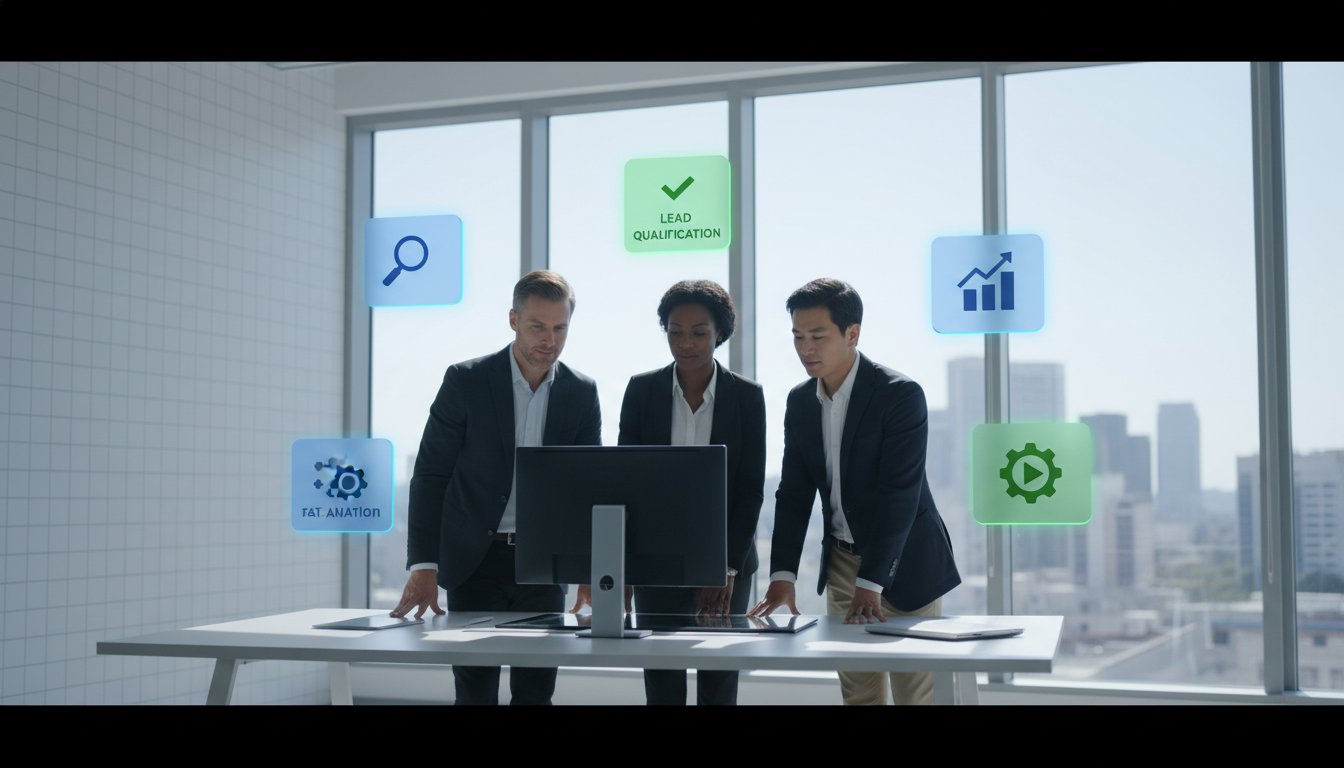
Burnout is not caused by hard work; it is the inevitable result of repetitive, low-value manual friction that drains your top talent. You likely see the symptoms every day in high SDR turnover and declining call quality. When 67% of workers report burnout symptoms as of early 2026, the challenge is no longer just about morale. It is a direct threat to your revenue. You need to know how to reduce sales team burnout without sacrificing your pipeline or lowering quotas. You already know that manual lead qualification and the rejection fatigue of cold calling are the primary culprits.

This article provides the blueprint for an automation-first strategy that eliminates the friction once considered a mandatory part of the job. You'll discover how to leverage AI voice agents, automated lead nurturing, and intelligent CRM workflows to offload the administrative burden entirely. We will examine how to bridge the reinvestment gap, turning saved hours into higher closing rates and a sustainable, high-performance sales architecture. By the end, you'll have a clear path to a more focused and profitable sales force that scales without the traditional human cost.

Key Takeaways

  • Identify the mechanical vs. emotional divide to isolate the specific repetitive tasks that cause cognitive fatigue and high turnover.
  • Discover exactly how to reduce sales team burnout by implementing an "Automation-First" strategy that targets low-reward manual friction.
  • Audit your sales funnel to pinpoint "Burnout Zones" where manual lead qualification bottlenecks your revenue growth and rep morale.
  • Leverage AI Voice Agents and automated lead nurturing to handle high-volume outreach, ensuring human reps focus exclusively on high-value closing.
  • Master a 5-step framework to transition your sales force from exhausted lead sifters into high-performance strategic architects.

The Anatomy of Sales Burnout: Why Your Team is Reaching a Breaking Point

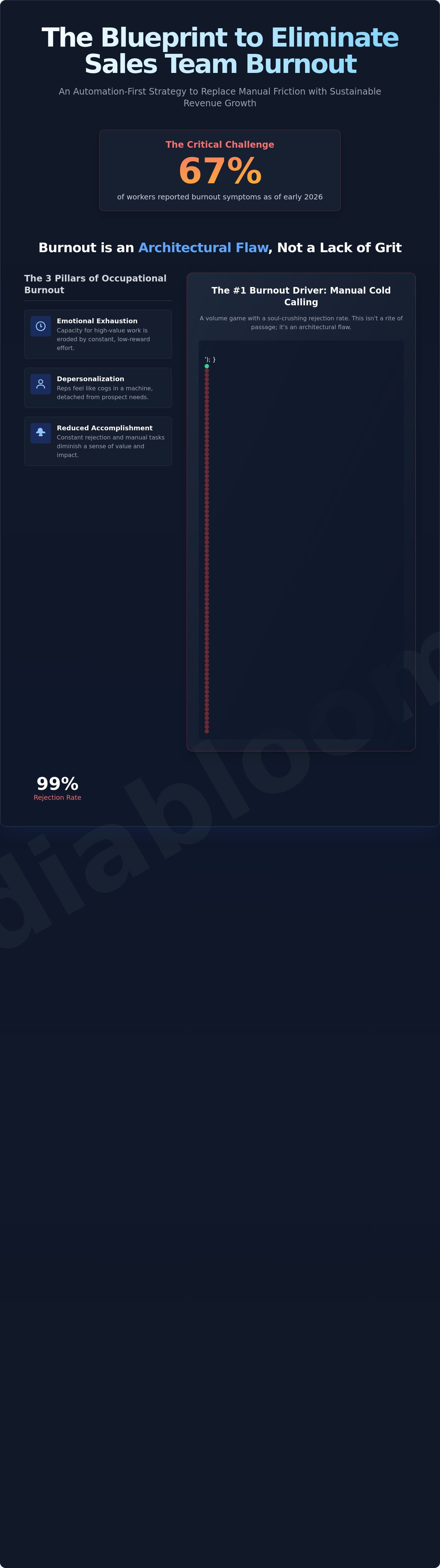
Scientifically, Occupational burnout is characterized by three distinct pillars: emotional exhaustion, depersonalization, and a sense of reduced personal accomplishment. In a sales context, this manifests as a rep who no longer cares about the prospect's needs. They feel like a cog in a broken machine. Solving this requires a shift in focus. You must address the underlying system efficiency rather than individual resilience. Understanding how to reduce sales team burnout starts with acknowledging that your current manual workflows are the primary source of the problem.

To better understand this concept, watch this helpful video:

The Cost of High SDR Turnover

Manual Cold Calling: The #1 Burnout Driver

The dial-and-smile era is officially over. Manual outreach is a volume game with a crushing 99% rejection rate. Forcing talented professionals to endure hundreds of hang-ups daily is an architectural flaw. It is not a rite of passage. High-tier talent in 2026 won't tolerate grunt work that a machine can handle better. If your strategy relies on manual volume, you aren't just losing leads. You're losing the very people capable of closing them. Learning how to reduce sales team burnout means moving these high-friction tasks to automated systems that don't suffer from rejection fatigue.

The Mechanical vs. Emotional Divide: Offloading the Mental Burden

Understanding the neuroscience of sales burnout reveals that the constant shift between high-stakes negotiation and low-reward administrative work creates a state of chronic stress. By 2026, 81% of sales teams have adopted AI to mitigate this friction. However, simply having the tools isn't enough. You must build a 'human-in-the-loop' system where AI handles the volume while your reps handle the intent. This is the most effective way to solve how to reduce sales team burnout while simultaneously driving 1.3x higher revenue growth.

Automated Lead Nurturing as a Fatigue Buffer

The Psychology of Winning: How Automation Boosts Morale

Winning is the best antidote to fatigue. Reps are 3x more motivated when their calendars are filled with qualified interest rather than cold dials. This is the dopamine effect of closing. Conversely, the cortisol effect of constant manual rejection leads to the disengagement seen in 79% of B2B sales reps today. By implementing a professional CRM automation setup, you remove the administrative 'drag' that kills momentum. Your team stays in a high-energy flow state because the system handles the data entry, leaving them to do what they do best: win.
How to reduce sales team burnout

Burnout-Proofing Your Pipeline: Manual vs. Automated Sales Workflows

The George Mason University research on sales burnout highlights that a lack of autonomy and repetitive, fixed-mindset tasks are primary drivers of exhaustion. Automation restores that autonomy. It allows reps to focus on strategic outcomes rather than mechanical inputs. AI tools save sales professionals an average of 4.8 hours per week. In a high-volume environment, this translates to dozens of additional closing opportunities every month. Businesses using automation for lead generation report a 451% increase in qualified leads. These aren't just numbers; they represent the removal of the manual friction that causes teams to snap under pressure.

Task Comparison: Where the Hours Go

Manual reps hear 'no' hundreds of times a day. AI systems filter those rejections out before they ever reach a human ear. The ROI of human energy is maximized when talent is focused where it generates the most revenue. Consider the daily breakdown:

  • Data Entry: Manual (2 hours per day) vs. Automated (0 hours per day).
  • Lead Sifting: Manual (3 hours per day) vs. AI-Filtered (Real-time).
  • Actual Selling: Manual (1-2 hours per day) vs. AI-Augmented (6+ hours per day).

The Scalability Wall

A 5-Step Framework to Reduce Sales Fatigue via Intelligent Automation

Implementing a high-performance sales architecture requires more than just buying software. It requires a systematic removal of manual friction. To understand how to reduce sales team burnout, you must treat your sales funnel like an engine. If one part is grinding, the whole system eventually fails. This five-step framework provides the structural adjustments needed to transition from a high-stress environment to a scalable, automated revenue operation.

  • Step 1: Audit the 'Burnout Zones'. Pinpoint exactly where your reps spend the most time on non-selling activities. Usually, these are the high-friction stages where leads are cold and rejection is frequent.
  • Step 2: Deploy AI Voice Agents. Offload the high-volume, low-conversion top-of-funnel tasks. Let AI handle the initial outreach and lead qualification while your humans focus on the final 10% of the deal.
  • Step 4: Launch Automated Lead Nurturing. Keep the pipeline warm on autopilot. Use intelligent multi-channel sequences to stay top-of-mind with prospects, reducing the need for manual follow-ups.
  • Step 5: Transition Reps to 'Closing Specialists'. Rebrand the sales role. When reps only handle intent-rich leads, their sense of accomplishment skyrockets, and turnover plummets.

Identifying the High-Friction Tasks

Success begins with transparency. Use direct team feedback to identify the most hated tasks in your current sales cycle. Often, the bottleneck isn't the volume of work, but the type of work. Implementing custom CRM automation allows you to streamline these specific bottlenecks. By setting baseline metrics for 'rep happiness' alongside traditional revenue targets, you create a sustainable culture of high performance. This balanced approach ensures that your growth doesn't come at the expense of your talent.

Deploying the AI Workforce

Logistics matter when introducing an AI workforce. Position these tools as 'digital assistants' designed to handle the grunt work, not as replacements for the team. Syncing AI voice interactions directly into your CRM ensures that no data is lost during the hand-off. Your team must be trained to pick up the baton from the AI agent seamlessly, treating the AI-qualified lead as a warm introduction. This synergy allows you to scale volume without increasing the human toll. If you are ready to architect a burnout-proof pipeline, connect with our automation experts today.

Scaling Performance Without the Human Toll: The MediaBloom Approach

The Future of the Sales Workforce

The industry is moving toward smaller, elite teams supported by massive AI infrastructure. These "Architect-Closers" manage the systems that generate their leads. For a deeper technical analysis, read The Definitive Guide to AI Voice Agents. Companies that refuse to automate will find that burnout becomes their greatest competitive disadvantage. They'll lose their best talent to organizations that provide better tools and more autonomy. Understanding how to reduce sales team burnout is now a requirement for operational survival.

Next Steps: Reclaim Your Team's Time

Your team's energy is your most valuable asset. Don't waste it on manual dials and cold follow-ups. We invite you to watch a demo of our AI agents in action to see how they integrate into high-growth enterprises. MediaBloom builds bespoke engines tailored to your specific industry and CRM requirements. It's time to stop burning out your best talent. Start automating the noise and focus on the signals that close deals. Contact our team to begin your transition to an automation-first strategy.

Future-Proof Your Sales Force: The Shift to Automation-First

Legacy sales models are failing. High turnover and rejection fatigue are not unavoidable costs of doing business; they are symptoms of an obsolete manual architecture. To support a transition to more modern systems, Landmark Technologies provides the managed IT infrastructure and support necessary to ensure your digital tools run seamlessly. By isolating mechanical tasks and offloading them to intelligent systems, you protect your team's mental bandwidth for high-value closing. You've seen the framework for success: audit the friction, deploy the agents, and automate the nurturing. These aren't just incremental improvements. They are the foundation of a 2026 revenue engine.

Scale your sales without the burnout—Watch the MediaBloom Demo

Your team is ready to win. Give them the engine they deserve.

Frequently Asked Questions

How do I know if my sales team is truly burnt out or just underperforming?

Burnout is a systemic energy failure, whereas underperformance is usually a skill or motivation gap. Monitor your top performers for signs of emotional exhaustion, depersonalization, or a sudden drop in personal accomplishment. If your most reliable closers are missing targets and showing signs of chronic fatigue, the problem is your workflow architecture. Underperformance typically lacks this element of physical and mental depletion.

Will my customers be able to tell they are talking to an AI voice agent?

How long does it take to implement CRM automation for a sales team?

Can AI automation actually improve the quality of my leads?

AI improves lead quality by enforcing strict, data-driven qualification criteria at every stage of the funnel. Human reps often skip qualification steps when they are tired or rushing to meet a daily dial quota. AI agents never experience fatigue and verify every required data point. This ensures your closing specialists only spend time on intent-rich prospects, which is a critical part of how to reduce sales team burnout while increasing win rates.

What is the cost difference between hiring a new SDR and deploying an AI voice agent?

How do I transition my team to an automated workflow without causing friction?

Introduce automation as a force multiplier designed to handle the "noise" so they can focus on the "signals." Start by automating the administrative tasks your team hates most, such as manual CRM updates or cold follow-up sequences. When your reps see their calendars filling with warm, qualified leads, they will embrace the system. This transition is essential for any leader researching how to reduce sales team burnout while maintaining a high-performance culture.

Is sales automation only for large enterprises or can small teams benefit too?

Automation is a survival tool for small teams that need to compete with larger organizations. It allows a single closer to operate with the efficiency of a full-scale department by offloading the top-of-funnel grunt work. While enterprises use automation for global scalability, small teams use it to maximize their limited human resources and ensure no lead is ever wasted. It levels the playing field by providing enterprise-grade infrastructure to teams of any size.
Frequently Asked Questions

The Cost of High SDR Turnover

Constant churn is an expensive operational leak. Beyond the direct costs of recruiting and training new reps every 6 to 12 months, turnover destroys the continuity of long-term client relationships. When an SDR leaves, the institutional knowledge of their active leads vanishes. This creates survivor guilt among the remaining team members. They must absorb the abandoned workload while watching their peers exit for more automated, modern environments. It's a cycle that prevents you from ever reaching true scale.

Manual Cold Calling: The #1 Burnout Driver

The dial-and-smile era is officially over. Manual outreach is a volume game with a crushing 99% rejection rate. Forcing talented professionals to endure hundreds of hang-ups daily is an architectural flaw. It is not a rite of passage. High-tier talent in 2026 won't tolerate grunt work that a machine can handle better. If your strategy relies on manual volume, you aren't just losing leads. You're losing the very people capable of closing them. Learning how to reduce sales team burnout means moving these high-friction tasks to automated systems that don't suffer from rejection fatigue. Efficiency is not just about speed; it's about cognitive allocation. To scale effectively, you must separate 'High-Value Closing' from 'Lead Sifting.' Closing is emotional. It requires empathy, nuance, and strategic negotiation. Lead sifting is mechanical. It is repetitive, predictable, and data-driven. When you force a high-performing Account Executive to perform mechanical tasks, you aren't just wasting their time. You're eroding their mental capacity. This distinction is the core of an 'Automation First' philosophy: if a task is repeatable, a human should never touch it. Understanding the neuroscience of sales burnout reveals that the constant shift between high-stakes negotiation and low-reward administrative work creates a state of chronic stress. By 2026, 81% of sales teams have adopted AI to mitigate this friction. However, simply having the tools isn't enough. You must build a 'human-in-the-loop' system where AI handles the volume while your reps handle the intent. This is the most effective way to solve how to reduce sales team burnout while simultaneously driving 1.3x higher revenue growth. Gartner reports that AI tools save sales professionals 4.8 hours per week on average. Yet, 72% of organizations fail to reinvest this time into high-value activities. This is where most strategies fail. To truly understand how to reduce sales team burnout, you must mandate that these saved hours are used for relationship building, not more 'grunt work.' This transition from a volume-based model to a value-based model is what separates market leaders from those struggling with turnover. It requires a foundational shift in how you view your sales architecture.

Automated Lead Nurturing as a Fatigue Buffer

Stop forcing your reps to chase ghosts. Automated lead nurturing uses multi-channel sequences to warm up prospects before a human ever picks up the phone. By the time a rep enters the conversation, the 'chase' phase is over. Intelligent follow-up systems ensure that no lead falls through the cracks without requiring a single manual email from your team. Automated lead nurturing preserves sales rep energy for the final 10% of the deal where human persuasion actually matters.

The Psychology of Winning: How Automation Boosts Morale

Winning is the best antidote to fatigue. Reps are 3x more motivated when their calendars are filled with qualified interest rather than cold dials. This is the dopamine effect of closing. Conversely, the cortisol effect of constant manual rejection leads to the disengagement seen in 79% of B2B sales reps today. By implementing a professional CRM automation setup, you remove the administrative 'drag' that kills momentum. Your team stays in a high-energy flow state because the system handles the data entry, leaving them to do what they do best: win. A manual sales workflow is a linear, fragile system. It relies entirely on human stamina to function. An automated workflow is an elastic, resilient engine that scales without fatigue. When you analyze how to reduce sales team burnout, the most striking difference is found in the daily calendar. A manual rep spends approximately 70% of their day on non-revenue-generating tasks like prospecting, list building, and data entry. An AI-augmented rep spends that same time in active, high-intent negotiations. This isn't just a minor improvement; it's a total reconfiguration of the sales role that prioritizes human talent over mechanical labor. The George Mason University research on sales burnout highlights that a lack of autonomy and repetitive, fixed-mindset tasks are primary drivers of exhaustion. Automation restores that autonomy. It allows reps to focus on strategic outcomes rather than mechanical inputs. AI tools save sales professionals an average of 4.8 hours per week. In a high-volume environment, this translates to dozens of additional closing opportunities every month. Businesses using automation for lead generation report a 451% increase in qualified leads. These aren't just numbers; they represent the removal of the manual friction that causes teams to snap under pressure. Positioning automation correctly is essential for team buy-in. It is not a replacement for your closers; it is a force multiplier for their expertise. By offloading the 'chase' to AI voice agents and automated lead nurturing, you ensure your team only interacts with prospects who are ready to talk. This shift eliminates the 'rejection fatigue' that defines the traditional SDR role. It transforms your sales floor from a high-stress boiler room into a focused, high-output closing environment.

Task Comparison: Where the Hours Go

Manual reps hear 'no' hundreds of times a day. AI systems filter those rejections out before they ever reach a human ear. The ROI of human energy is maximized when talent is focused where it generates the most revenue. Consider the daily breakdown:

The Scalability Wall

Hiring more humans to solve a volume problem is a legacy strategy. It creates an exponential increase in management overhead and turnover risk. An automated AI workforce provides the stability that human teams cannot maintain at extreme scales. It doesn't get tired, it doesn't quit, and it doesn't suffer from the mental toll of cold outreach. You can scale your outreach by 10x without adding a single ounce of stress to your human team. This is the only way to build a sustainable pipeline that survives the competitive demands of 2026. Implementing a high-performance sales architecture requires more than just buying software. It requires a systematic removal of manual friction. To understand how to reduce sales team burnout, you must treat your sales funnel like an engine. If one part is grinding, the whole system eventually fails. This five-step framework provides the structural adjustments needed to transition from a high-stress environment to a scalable, automated revenue operation.

Identifying the High-Friction Tasks

Success begins with transparency. Use direct team feedback to identify the most hated tasks in your current sales cycle. Often, the bottleneck isn't the volume of work, but the type of work. Implementing custom CRM automation allows you to streamline these specific bottlenecks. By setting baseline metrics for 'rep happiness' alongside traditional revenue targets, you create a sustainable culture of high performance. This balanced approach ensures that your growth doesn't come at the expense of your talent.

Deploying the AI Workforce

Logistics matter when introducing an AI workforce. Position these tools as 'digital assistants' designed to handle the grunt work, not as replacements for the team. Syncing AI voice interactions directly into your CRM ensures that no data is lost during the hand-off. Your team must be trained to pick up the baton from the AI agent seamlessly, treating the AI-qualified lead as a warm introduction. This synergy allows you to scale volume without increasing the human toll. If you are ready to architect a burnout-proof pipeline, connect with our automation experts today. MediaBloom approaches revenue operations as a structural engineering challenge. We don't believe in "hustle culture" because it doesn't scale. Instead, we deploy AI Voice Agents to handle the high-volume grunt work of cold outreach. This is the ultimate answer to how to reduce sales team burnout. By offloading the initial 90% of the sales cycle to machines, your human talent remains fresh for the high-stakes closing conversations that actually drive growth. It's a fundamental shift from manual labor to strategic oversight. Our human-parity conversational AI maintains your brand's quality standards while operating at a volume no human team could survive. This isn't about replacing people. It's about providing them with a digital shield against rejection fatigue. In the 2026 market, an automated sales machine is the only way to remain competitive. You must move from a legacy BPO mindset—where you throw more headcount at a volume problem—to an AI Automation mindset. This shift maximizes ROI by ensuring every human hour is spent on high-level strategy and revenue-generating interactions.

The Future of the Sales Workforce

The industry is moving toward smaller, elite teams supported by massive AI infrastructure. These "Architect-Closers" manage the systems that generate their leads. For a deeper technical analysis, read The Definitive Guide to AI Voice Agents. Companies that refuse to automate will find that burnout becomes their greatest competitive disadvantage. They'll lose their best talent to organizations that provide better tools and more autonomy. Understanding how to reduce sales team burnout is now a requirement for operational survival.

Next Steps: Reclaim Your Team's Time

Your team's energy is your most valuable asset. Don't waste it on manual dials and cold follow-ups. We invite you to watch a demo of our AI agents in action to see how they integrate into high-growth enterprises. MediaBloom builds bespoke engines tailored to your specific industry and CRM requirements. It's time to stop burning out your best talent. Start automating the noise and focus on the signals that close deals. Contact our team to begin your transition to an automation-first strategy. Legacy sales models are failing. High turnover and rejection fatigue are not unavoidable costs of doing business; they are symptoms of an obsolete manual architecture. By isolating mechanical tasks and offloading them to intelligent systems, you protect your team's mental bandwidth for high-value closing. You've seen the framework for success: audit the friction, deploy the agents, and automate the nurturing. These aren't just incremental improvements. They are the foundation of a 2026 revenue engine. Mastering how to reduce sales team burnout is the first step toward building a resilient, high-performance operation. MediaBloom provides the technical infrastructure to make this a reality. Our AI Voice Agents deliver human-parity conversation to handle the volume, while custom CRM integrations and automated lead nurturing ensure your pipeline converts on autopilot. It's time to stop fighting the machinery and start building it. This shift allows your best talent to focus on what they do best: building relationships and closing complex deals. Scale your sales without the burnout—Watch the MediaBloom Demo Your team is ready to win. Give them the engine they deserve.

How do I know if my sales team is truly burnt out or just underperforming?

Burnout is a systemic energy failure, whereas underperformance is usually a skill or motivation gap. Monitor your top performers for signs of emotional exhaustion, depersonalization, or a sudden drop in personal accomplishment. If your most reliable closers are missing targets and showing signs of chronic fatigue, the problem is your workflow architecture. Underperformance typically lacks this element of physical and mental depletion.

Will my customers be able to tell they are talking to an AI voice agent?

Modern AI voice agents utilize human-parity conversation technology to deliver seamless interactions. These systems handle nuance, tone, and context with extreme precision, avoiding the robotic cadence of legacy bots. While many organizations choose to be transparent about their technology, the flow is natural enough that prospects remain engaged. The goal is to provide a high-quality experience that moves the prospect toward a solution without the friction of a poorly executed manual call.

How long does it take to implement CRM automation for a sales team?

A professional CRM automation setup typically requires a few weeks to fully integrate, test, and deploy. The timeline depends on the complexity of your current lead routing and the depth of custom workflows needed to eliminate manual data entry. Most high-growth teams see stabilized operations and a noticeable reduction in administrative drag within the first thirty days of deployment.

Can AI automation actually improve the quality of my leads?

AI improves lead quality by enforcing strict, data-driven qualification criteria at every stage of the funnel. Human reps often skip qualification steps when they are tired or rushing to meet a daily dial quota. AI agents never experience fatigue and verify every required data point. This ensures your closing specialists only spend time on intent-rich prospects, which is a critical part of how to reduce sales team burnout while increasing win rates.

What is the cost difference between hiring a new SDR and deploying an AI voice agent?

Deploying an AI voice agent eliminates the massive overhead associated with recruiting, onboarding, and providing benefits for a human SDR. The ROI is driven by the machine's ability to handle the outreach volume of an entire SDR pod without the risk of turnover or the need for constant management. You trade a high-risk, high-turnover human role for a stable, scalable digital infrastructure that delivers consistent output.

How do I transition my team to an automated workflow without causing friction?

Introduce automation as a force multiplier designed to handle the "noise" so they can focus on the "signals." Start by automating the administrative tasks your team hates most, such as manual CRM updates or cold follow-up sequences. When your reps see their calendars filling with warm, qualified leads, they will embrace the system. This transition is essential for any leader researching how to reduce sales team burnout while maintaining a high-performance culture.

Is sales automation only for large enterprises or can small teams benefit too?

Automation is a survival tool for small teams that need to compete with larger organizations. It allows a single closer to operate with the efficiency of a full-scale department by offloading the top-of-funnel grunt work. While enterprises use automation for global scalability, small teams use it to maximize their limited human resources and ensure no lead is ever wasted. It levels the playing field by providing enterprise-grade infrastructure to teams of any size.

About the writer
JJ

John Jahshan

Founder and CEO, MediaBloom
Fort Myers, Florida Writes on AI voice agents, Speed-to-lead automation

John Jahshan is the founder and CEO of MediaBloom. He works directly with agencies, operators, and enterprise teams to design and deploy AI revenue systems — voice agents, speed-to-lead automation, reactivation campaigns, and ads management — that turn attention into booked appointments and signed deals. He writes about the operator playbooks, engineering decisions, and partnership models behind the systems MediaBloom ships for clients.

AI voice agentsSpeed-to-lead automationRevenue operationsPartnership programs
Newsletter

Get the MediaBloom newsletter.

One email per week. Research, launches, and operator playbooks. Zero fluff.

Ready to see MediaBloom in action?

Talk to our team about deploying AI across your funnel.