Omnichannel is a unified, customer-centered experience where every channel shares the same data and context. Multichannel is the use of multiple independent channels, each managed and measured on its own. If you need to scale reach fast with limited resources, start multichannel. If you can unify your data and systems, invest in omnichannel to prioritize customer experience and retention.
Both approaches show up constantly in retail and marketing conversations, and Gartner found that only 22% of customers now start and resolve service issues on a brand’s own channels. That single data point explains why so many companies are rethinking channel strategy, and why the choice between these two models has real financial stakes, not just operational ones.
Key Takeaways
Omnichannel wins on retention and lifetime value when the data infrastructure supports it, while multichannel wins on speed and cost for teams still building that foundation.
| Point | Details |
|---|---|
| Core difference | Omnichannel unifies customer data across channels; multichannel runs channels independently. |
| Start where you are | Teams without a CDP or CRM should stabilize multichannel performance before attempting integration. |
| Revenue upside is real | BCG’s survey found 40% of companies tracking omnichannel value saw 5% to 15%+ revenue lifts. |
| Identity resolution comes first | Unified customer ID and CDP/CRM integration must exist before orchestration logic works. |
| Mediabloom’s role | Mediabloom unifies voice, chat, SMS, and email into one lead record, cutting the integration work behind omnichannel rollouts. |
Table of Contents
- Omnichannel vs Multichannel: What Multichannel Actually Means
- How Multichannel Operates Day To Day
- What Omnichannel Really Means for Customer Experience
- The Architecture Behind Omnichannel Systems
- Omnichannel vs Multichannel: Key Differences at a Glance
- Benefits of Multichannel and Benefits of Omnichannel
- Real Brands, Two Different Models
- How to Choose Between Omnichannel and Multichannel
- Prerequisites and the Pitfalls That Sink Most Rollouts
- What the Research Says About Business Impact
- Where Mediabloom Fits Into Your Channel Strategy
- Sources
- FAQ
Omnichannel vs Multichannel: What Multichannel Actually Means
Multichannel marketing means running several channels, such as email, your website, marketplaces, social media, and physical stores, as separate operations. Each channel has its own goals, its own promotions, and often its own team managing it. A retailer might run a Black Friday deal on Instagram, a different discount code through email, and a third price on Amazon, all at the same time, with no coordination between them.
This is channel-centric, not customer-centric. The question driving decisions is “how does this channel perform?” rather than “what does this specific customer need right now?”
Typical multichannel setups include:
- Separate ad accounts and analytics dashboards per platform
- Independent inventory feeds for the website versus marketplace listings
- Channel-specific promotions that don’t carry over to other touchpoints
- Separate teams (or agencies) managing email, social, and paid search
Multichannel tends to fit smaller teams, leaner budgets, and product-led ecommerce brands that need to get a message in front of buyers quickly without building complex infrastructure first.
How Multichannel Operates Day To Day
The operating rhythm is straightforward: plan per channel, execute per channel, measure per channel. A marketing team sets a Q2 goal for email, a separate goal for paid social, and a separate goal for the marketplace storefront, then reports on each in isolation.
- Plan campaigns and budgets by individual channel
- Launch and manage each channel with its own creative and cadence
- Pull performance data from each platform’s native dashboard
- Compare results manually across spreadsheets, since there’s no shared reporting layer
The tech stack reflects this fragmentation: separate ad platforms, discrete inventory tools, and channel-specific CRMs or none at all. That’s workable at small scale, but it breaks down fast once volume grows.
Pro Tip: Before you attempt any cross-channel integration, centralize your reporting first. Pull every channel’s numbers into one dashboard, even manually, so you can see where the real gaps are before you spend money closing them.
What Omnichannel Really Means for Customer Experience
Omnichannel marketing means every channel shares the same customer data and delivers a consistent experience regardless of where someone engages. According to Adobe, omnichannel requires a unified customer view and synchronized promotions, so a discount code seen in an email matches what’s available in-store an hour later.

The practical outcome is continuity. A shopper adds an item to their cart on mobile, gets a follow-up text about it, and finds it waiting in their cart when they open the desktop site that evening. Customer service reps can see that same shopper’s full purchase and support history no matter which channel they call in on.
Core properties of an omnichannel setup include:
- A single customer view spanning every touchpoint
- Synchronized inventory across stores, warehouses, and online
- Cross-channel orchestration, so a message in one channel informs the next
- Personalization built from unified behavioral and purchase data
This is a fundamentally different operating philosophy from multichannel. The question shifts from “how does this channel perform?” to “what does this customer need next, based on everything we already know about them?”
The Architecture Behind Omnichannel Systems
Omnichannel runs on a layered architecture: identity resolution matches a customer’s activity across devices and channels, a centralized profile (usually a CDP or advanced CRM) stores that unified data, an orchestration layer decides what message or offer to serve, and channel connectors deliver it to email, SMS, chat, or in-store systems.
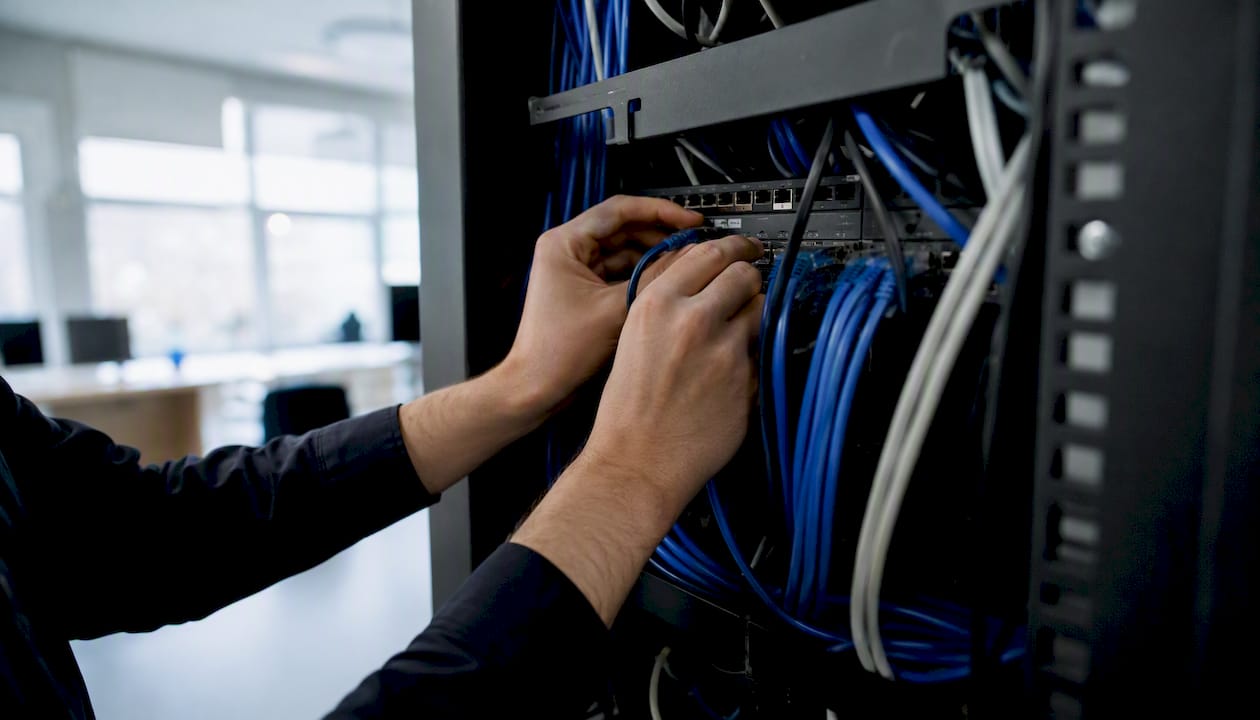
Real-time inventory and order sync matters here in ways multichannel never requires. Buy-online-pickup-in-store and ship-from-store models depend on knowing exact stock levels at the moment a customer checks out, not a batch update from last night. Shopify points to synchronized inventory and real-time systems as prerequisites for omnichannel at scale.
This is where the integration effort concentrates: building data pipelines and middleware that multichannel setups simply don’t need.
- Identity resolution across devices and sessions
- A centralized customer profile updated in real time
- An orchestration layer that triggers the next-best action
- Channel connectors for voice, chat, SMS, and email
Pro Tip: Don’t build orchestration logic before your identity resolution is solid. A beautifully designed customer journey means nothing if the system can’t reliably tell that the person on chat is the same one who called your support line yesterday.
Omnichannel vs Multichannel: Key Differences at a Glance
| Dimension | Multichannel | Omnichannel |
|---|---|---|
| Focus | Channel or product-centric | Customer-centric |
| Integration level | Low, channels operate independently | High, shared systems and data |
| Data architecture | Siloed per channel | Unified customer profile |
| Inventory sync | Separate feeds per channel | Real-time, shared across channels |
| Personalization | Limited, channel-specific | Deep, based on full customer history |
| Measurement | Per-channel dashboards | Cross-channel attribution |
| Cost and effort | Lower upfront investment | Higher upfront, ongoing integration cost |
| Typical outcome | Broad reach, faster launch | Higher retention, stronger lifetime value |
The most decision-relevant gap is data architecture. Everything else, personalization, measurement, inventory sync, flows from whether your customer data lives in one place or in ten. A headless commerce setup or a marketplace-only strategy can thrive as multichannel; a brand chasing loyalty and repeat purchase behavior usually can’t stay multichannel for long.
Benefits of Multichannel and Benefits of Omnichannel
Multichannel’s advantages are speed and flexibility. You can launch a new channel in weeks, not quarters, and a small team can manage a handful of high-performing channels without hiring a data engineer. According to Retainful, a majority of marketers already run 3 to 4 channels, which shows how accessible this model is even for lean teams.
Omnichannel’s advantages show up in retention and lifetime value. HBR’s study of 46,000 shoppers found that customers using multiple integrated channels spent more and stayed more loyal than single-channel shoppers. BCG’s June 2025 survey found that 40% of companies tracking omnichannel value saw revenue lifts between 5% and more than 15%.
- Multichannel gains: faster time-to-market, lower initial cost, easier for small teams to manage
- Omnichannel gains: stronger retention, higher customer lifetime value, measurable revenue lift
The trade-off is time to value. Multichannel pays off almost immediately; omnichannel takes longer to build but compounds over time.
Real Brands, Two Different Models
A classic multichannel setup looks like a retailer selling through its own site, a marketplace listing, and a handful of social storefronts, each with separate pricing, separate promotions, and separate customer service queues. The customer experience is inconsistent by design because no shared system links the channels together.
A classic omnichannel setup looks like a retailer where a customer service agent, a chatbot, and an in-store associate can all pull up the same purchase history and pending order, because inventory sync and a unified CRM connect every touchpoint. That’s the architecture readers are really asking about when they wonder whether a specific retailer counts as one or the other.
- Cart persistence across devices signals a unified customer profile at work
- Consistent pricing and promotions across every channel signals synchronized systems
- A support agent who already knows your order history signals shared CRM data
- Separate loyalty programs per channel signals a multichannel setup, not omnichannel
How to Choose Between Omnichannel and Multichannel
Run through this checklist before committing budget to either model:
- Map your customer journey complexity. If most purchases happen in a single session on one channel, multichannel is probably sufficient.
- Assess your data maturity. Do you have a CDP, a modern CRM, or any system capable of unifying customer records? If not, omnichannel isn’t realistic yet.
- Check technology readiness. Can your inventory systems sync in real time across channels, or are you working from daily batch updates?
- Set a realistic budget. Omnichannel integration work, middleware, identity resolution, orchestration, costs more upfront than adding a new marketing channel.
- Confirm organizational alignment. Do marketing, sales, and operations agree on shared KPIs, or does each team optimize its own channel in isolation?
If you’re a lean team without unified data, start multichannel and get each channel performing well on its own first. BigCommerce makes the point directly: attempting omnichannel without strong single-channel performance and a real data foundation is one of the most common reasons transformation projects stall.
Once individual channels are solid, migrate in phases rather than all at once.
Pro Tip: Pick two or three high-value touchpoints, typically web, email, and point of sale, and integrate those first. Measure the lift before you expand further. A phased approach shows ROI early and gives your team a working model to replicate.
Prerequisites and the Pitfalls That Sink Most Rollouts
Before starting an omnichannel build, confirm you have these in place; practical insights on omnichannel lead capture readiness can be found in what is omnichannel lead capture for service businesses:
- A single customer ID that persists across every channel
- A CDP or CRM capable of storing and updating that unified profile
- Inventory and order sync running in near real time
- An orchestration layer to decide what message goes where
- Governance and clear service-level agreements between marketing, sales, and operations teams
The most common pitfalls all trace back to skipping one of these:
- Data fragmentation: customer records live in five disconnected systems. Fix it with a dedicated data-mapping sprint before building anything customer-facing.
- Siloed KPIs: marketing measures email opens while operations measures fulfillment speed, with no shared metric connecting them. Align KPIs across teams before launch.
- Inconsistent offers: a promo code works online but not in-store. This usually means promotions aren’t flowing through the same system.
- Poor identity resolution: the same customer gets treated as five different people. This is the root cause behind most of the other pitfalls on this list.
What the Research Says About Business Impact
The numbers behind omnichannel adoption are hard to ignore. HBR’s research on 46,000 shoppers found that customers who engaged across multiple integrated channels showed measurably better purchasing behavior than single-channel shoppers, more visits, higher spend, and stronger loyalty over time.
Omnichannel retailing produces materially better customer outcomes than single-channel approaches, based on HBR’s large-scale shopper study.
Supporting evidence points the same direction:
- BCG’s June 2025 survey found 40% of companies tracking omnichannel value saw revenue lifts of 5% to more than 15%
- Gartner found only 22% of customers resolve issues entirely within a brand’s own channels, reinforcing the need for cross-platform continuity
- Retail experts widely note that omnichannel is a multi-year transformation, not a quick campaign shift
None of this means multichannel is obsolete. It means the revenue upside from integration is real and quantifiable for companies that get the data foundation right first.
What Mediabloom Has Learned Building Multi-Channel Automation
Mediabloom builds automation that connects voice, chat, SMS, and email into one lead pipeline, and the pattern is consistent: businesses see the biggest lift when they stop treating channels as separate silos and start feeding one unified lead record. Two things matter most. Start with your highest-value integration point, usually voice and chat working together, rather than trying to unify everything at once. And secure a single customer or lead ID early, since every personalization and follow-up decision downstream depends on it.
Where Mediabloom Fits Into Your Channel Strategy
Building the data unification that omnichannel demands, identity resolution, CRM integration, real-time routing, is exactly the kind of technical lift that stalls most in-house projects for months. Mediabloom closes that gap with an all-in-one platform that connects AI voice agents, chatbots, SMS, and email into a single lead record from day one, so you’re not stitching together five vendors to get the unified view omnichannel requires.
Companies like Miracle Ear and 1-800 Accountant have used this approach to generate over 10,000 monthly leads without building custom integration infrastructure from scratch. Mediabloom connects to more than 600 CRM platforms, which means your existing customer data doesn’t need to be ripped out and replaced to get cross-channel continuity working. For teams evaluating whether to build this in-house or bring in a partner, the B2B lead generation solution page walks through how the pieces fit together, and the Fifth Avenue Leads case study shows the results in practice. If you’re ready to see how unified lead data would work for your channels specifically, book a demo to walk through your current stack.
Sources
- Gartner survey finds more than half of customer service journeys now start on third-party platforms
- A study of 46,000 shoppers shows that omnichannel retailing works - HBR
- Omnichannel vs Multichannel: Key Differences - Shopify
- Omnichannel vs Multichannel: Adobe Business Blog
- Omnichannel vs. Multichannel | BigCommerce
FAQ
Is Nike Omnichannel or Multichannel?
Nike operates an omnichannel model, unifying its app, website, and stores around a single membership profile so purchase history and rewards follow the customer across every touchpoint.
Is Walmart Multichannel or Omnichannel?
Walmart runs an omnichannel model built on real-time inventory sync, letting customers check stock, order online, and pick up in-store with continuity across channels.
Is Starbucks Omnichannel or Multichannel?
Starbucks is a well-known omnichannel example, since its rewards app syncs mobile ordering, payment, and loyalty points across app, in-store, and drive-through interactions.
What Is the Biggest Barrier to Going Omnichannel?
Data fragmentation is the most common barrier. Without a unified customer profile through a CDP or CRM, integration efforts stall before orchestration even becomes possible.
Can a Small Business Run an Omnichannel Strategy?
Yes, but usually in phases. Small businesses often start multichannel, then integrate their highest-value touchpoints, such as email, web, and point of sale, once they have a workable customer data foundation, an approach platforms like Mediabloom are built to support.