Recording a phone call is legal under federal law if one participant consents to it, per 18 U.S.C. § 2511. However, some states require all parties on the line to agree, and the FCC tells callers to check state law before hitting record. The safe operational default: play a recorded announcement and get consent every time, treating every call as if it might touch an all-party state.
TL;DR:
- Most states follow federal one-party consent laws, but nine states including California and Florida require all-party consent, making undisclosed recordings illegal there.
- Cross-state calls default to the strictest applicable law, so it’s safest to always disclose recording and obtain consent from all participants before starting.
- Automatic dialer systems with AI can enforce disclosure sequences, log consent events, and apply geo-detection to ensure compliance without relying on manual agent intervention.
- Violations can lead to criminal fines, imprisonment, and hefty civil damages, especially in all-party consent states or when handling large call volumes.
- Building a standardized, compliant call recording process with automated technology reduces legal risk and improves customer trust.
Table of Contents
- Call Recording Consent Laws by State: The Quick Breakdown
- The Federal Wiretap Act and What the FCC Actually Says
- Interstate Calls: Whose Rule Actually Applies?
- Building a Call Recording Consent Checklist That Actually Holds Up
- Recording Employees at Work: Where the Business-Extension Exception Ends
- What Noncompliance Actually Costs
- Configuring Phone Systems for Compliant Recording
- How a Managed AI Calling Platform Handles This in Practice
- Our Take: Default to Disclosure, Every Time
- Automate Consent Disclosures Instead of Policing Them Manually
- Sources
- FAQ
Call Recording Consent Laws by State: The Quick Breakdown
Most of the country follows the federal rule. A recent 50-state legal survey counts roughly 37 jurisdictions that use one-party consent, nine states that require all-party consent, and a handful of hybrid states where the rule shifts depending on context, like whether the call is a business communication or a private one.
One-party consent means exactly one person on the call, including the person doing the recording, has to know about it and agree. Nobody else on the line needs to be told anything. This is the federal floor set by the Wiretap Act, and it’s the default rule in states like Texas, New York, and Ohio.
All-party consent (sometimes called “two-party consent,” though the more accurate term covers any number of participants) means every single person on the call has to consent before recording starts. California, Florida, Illinois, and Washington fall into this camp. Miss one person’s consent in these states and the recording itself becomes the legal problem, not just the content.
Here’s the practical split, based on the most commonly cited legal classifications:
| Consent type | Approximate state count | Examples | What it requires |
|---|---|---|---|
| One-party consent | ~37 states + DC | Texas, New York, Ohio, Arizona | Only the recording party needs to consent |
| All-party consent | 9 states | California, Florida, Illinois, Washington, Pennsylvania | Every participant must consent |
| Hybrid / context-dependent | A handful of states | Connecticut, Nevada | Rule depends on call type or reasonable expectation of privacy |
The takeaway for anyone making or receiving calls across state lines: if there’s any chance a call touches certain states, including California, Florida, Illinois, Pennsylvania, Washington, Massachusetts, Maryland, Michigan, Montana, and New Hampshire, which generally require all-party consent; therefore, the safest practice is to disclose recording and obtain consent from everyone on the line. Guessing wrong on jurisdiction isn’t a paperwork error. It’s a potential criminal exposure issue, which the next section breaks down in detail.
The Federal Wiretap Act and What the FCC Actually Says
Federal law sets the floor, not the ceiling, for call recording consent. Two statutes matter most here, and they work as a pair.
18 U.S.C. § 2511(2)(d) creates the one-party consent exception. It says a person who is a party to a call, or who has the consent of one party, can lawfully record it without telling anyone else. That’s the entire legal basis for one-party consent in the roughly three dozen states that follow the federal standard rather than a stricter state rule. 18 U.S.C. § 2520 is the companion piece: it gives the person whose call was illegally intercepted a civil cause of action, separate from any criminal charge.
The FCC doesn’t add a federal recording ban on top of the Wiretap Act. Its consumer guidance is explicit that the agency has no rule forbidding individuals from recording their own calls. What the FCC does regulate more directly is carrier behavior: telephone companies that record calls involving their own customers have historically been required to use an automatic tone warning or a verbal notification, a rule that traces back to 47 C.F.R. § 64.501. That regulatory history is part of why the beeping tone on old recorded business lines exists, and it’s the ancestor of the “this call may be recorded” announcement businesses use today.
Federal law and FCC guidance combine into a floor, not a shield. Because the FCC treats state law as the binding layer on top of the federal baseline, satisfying § 2511 doesn’t protect a business operating in or calling into an all-party state.
The exposure for getting it wrong runs on two tracks:
- Criminal exposure: violations of the Wiretap Act can carry fines and imprisonment for up to five years.
- Civil exposure: under § 2520, the person recorded without proper consent can sue for actual damages, statutory damages, punitive damages in some cases, and attorney’s fees.
- State-level exposure: all-party states often layer their own criminal and civil penalties on top of the federal ones, which is covered in more detail later in this guide.
Interstate Calls: Whose Rule Actually Applies?
The state law question gets harder the moment a call crosses state lines, which is most business calls. A business based in a one-party state calling a customer in California doesn’t get to simply apply its home state’s rule.
Courts have resolved this with a choice-of-law principle from Kearney v. Salomon Smith Barney, in which the California Supreme Court applied California’s all-party consent rule to calls placed into California from a one-party state, reasoning that California had the stronger interest in protecting its residents’ privacy. The practical result, confirmed by broader 50-state legal analysis, is that the state with the strictest applicable rule tends to govern, regardless of where the recording party is physically located.
That plays out differently depending on the call type:
- Outbound sales or support calls: if a call center in Texas dials a customer in Florida, Florida’s all-party rule likely controls, even though Texas alone would only require one-party consent.
- Inbound customer service calls: a customer calling into a business’s main line from an all-party state creates the same exposure in reverse. The business doesn’t control where its customers are physically sitting when they dial in.
- Multi-party conference calls: the risk compounds with each additional jurisdiction on the line. A three-way call touching Illinois, Ohio, and Nevada needs to satisfy the strictest of the three rules to be safe.
The operational rule that falls out of this is simple, even if the underlying law isn’t: when in doubt about where every participant is physically located, announce the recording and get everyone’s consent. Trying to track jurisdiction call by call is expensive and error-prone. Defaulting to all-party disclosure removes the guesswork entirely.
Building a Call Recording Consent Checklist That Actually Holds Up
Legal exposure aside, a consistent consent process is also just good customer relations. Nobody likes finding out after the fact that a call was recorded. Here’s how to build a process that satisfies the strictest applicable state law without slowing down every call.
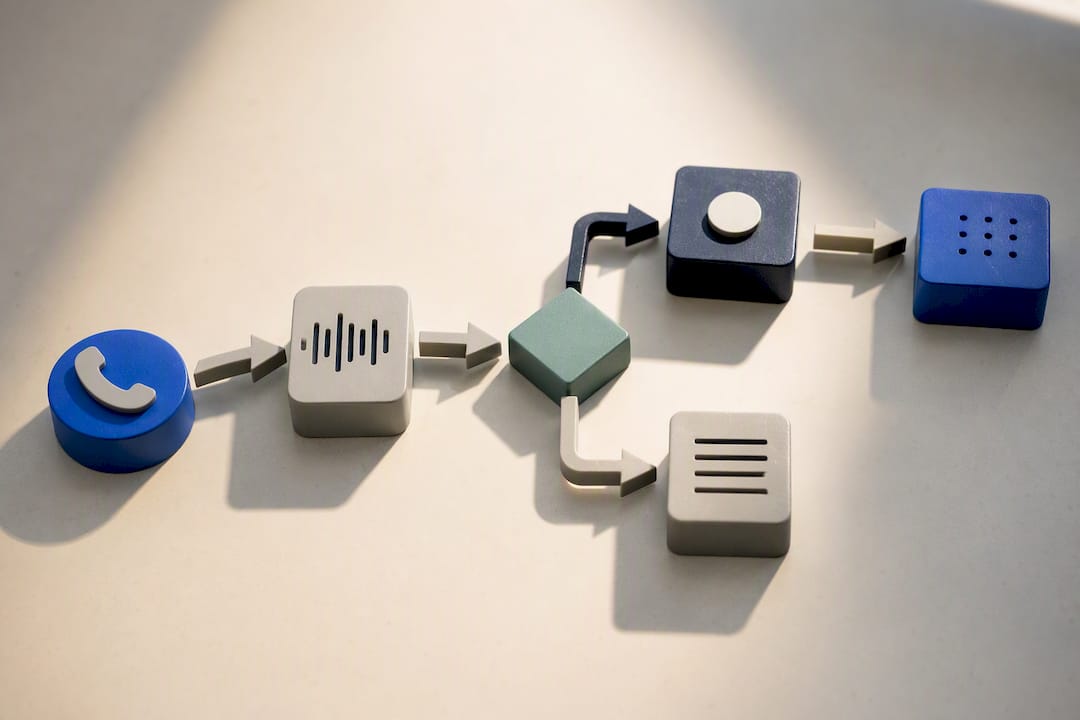
- Standardize a pre-record announcement. Every inbound and outbound line should play some version of “This call may be recorded for quality assurance” before recording actually starts, not after. The sequencing matters: if recording begins before the disclosure plays, the disclosure did nothing legally.
- Trigger recording only after the announcement completes. This is a configuration detail, not a policy statement. Many IVR and dialer systems default to recording from call initiation. That setting needs to be changed so the recording engine activates on a delay tied to the announcement’s playback.
- Use a consistent consent script for live agents. For calls that route to a human before any IVR disclosure plays, agents need a scripted line, something like: “I want to let you know this call is being recorded for training and quality purposes, is that okay with you?” Waiting for an affirmative response, even a simple “sure,” creates a cleaner consent record than assuming silence means agreement.
- Log the consent event, not just the recording. A defensible audit trail includes the call ID, timestamp, the announcement or script version played, and, where the technology supports it, geolocation data indicating which state each participant was calling from.
- Set a retention schedule and stick to it. Recordings held indefinitely increase both storage cost and legal exposure if they’re ever subpoenaed or breached. Most compliance programs retain call recordings for a fixed window, often 90 days to a few years depending on industry, then auto-purge.
- Restrict access by role. Recordings and consent logs should be visible only to the staff who need them, quality assurance leads, compliance officers, and specific managers, not the entire call center roster.
- Train staff on when implied consent isn’t enough. Continuing a call after an announcement plays is generally treated as implied consent in most one-party states. But some scenarios, particularly sensitive calls involving healthcare, legal, or financial details, warrant requiring express verbal consent rather than relying on implication.
Pro Tip: Configure your IVR to log a separate timestamp for “announcement completed” versus “recording started.” If those two timestamps are ever more than a second or two apart, that gap is exactly what a plaintiff’s attorney will point to in a lawsuit.
Getting this checklist into a live phone system is where a lot of businesses stall out, but leveraging an AI system implementation can automate IVR and consent flows for compliant call recording. It’s one thing to write the policy; it’s another to configure a dialer, IVR, and CRM to actually enforce it call after call without someone manually double-checking every log.
Recording Employees at Work: Where the Business-Extension Exception Ends
Employers monitoring employee calls operate under a different legal lever than customer-facing recording. The relevant concept is the business-extension exception, which permits an employer to monitor calls made on company-provided equipment for legitimate business purposes, like quality control or training, without running afoul of the Wiretap Act.
That exception has real limits, and misunderstanding them is a common employer mistake:
- The business-extension exception applies to company equipment used for business purposes. It does not automatically extend to personal calls an employee happens to take on a work phone, and several courts have found that employers must stop monitoring once a call is identified as personal.
- The exception is a federal-law concept. It does not override a stricter state law. An employer in an all-party consent state generally still needs employee consent to record work calls, business-extension exception or not.
- Ambiguous notice, like a line buried in an employee handbook nobody reads, is weaker evidence of consent than an explicit, signed monitoring acknowledgment collected during onboarding.
For HR and legal teams, the practical fix is straightforward: build specific monitoring-and-recording language into onboarding paperwork, have employees sign it, and spell out exactly which devices and call types are covered. Separate personal-call handling from business-call handling in that same policy, and make sure managers know to pause monitoring the moment a call is flagged personal.
What Noncompliance Actually Costs
The dollar figures behind unlawful call recording are not abstract. Under 18 U.S.C. § 2511, a criminal violation of the Wiretap Act can carry imprisonment of up to five years, and civil plaintiffs suing under § 2520 can recover the greater of actual damages or statutory damages, which some courts have set as high as $10,000 per violation, plus punitive damages and attorney’s fees in appropriate cases.
The exposure compounds fast in all-party states. A single unlawful recording is one violation. A call center that records thousands of calls a month without proper disclosure in an all-party jurisdiction isn’t looking at one lawsuit risk. It’s looking at a potential class action, where each recorded call becomes its own claim.
California’s wiretapping statute (CIPA) has become a particular flashpoint for class action litigation against businesses that record customer calls without adequate disclosure, often tied to chat-widget recording and call center software rather than deliberate wrongdoing. The underlying failure is usually the same: a vendor default that recorded before disclosure, or a script that skipped the announcement on a subset of calls.
Beyond the legal remedies, there’s a reputational cost that doesn’t show up in any statute. Customers who discover they were recorded without being told tend to escalate publicly, not quietly. A mitigation checklist worth keeping on hand: maintain proof of the disclosure script actually in use at any given time, delete recordings on schedule rather than indefinitely, and check whether existing business insurance covers wiretapping or privacy-violation claims, since many general liability policies exclude them.
Configuring Phone Systems for Compliant Recording
Getting call recording consent right at scale is a systems problem as much as a legal one. Engineers and vendors building or configuring call infrastructure should treat the following as non-negotiable technical controls:
- Sequence the recording trigger after the announcement, not before. This is the single most common misconfiguration in dialers and IVR platforms, and it’s usually a default setting nobody thought to change.
- Build geo-detection into the call flow. Systems that can identify a caller’s or callee’s area code or verified location can automatically apply the strictest applicable disclosure rule for that specific call, rather than relying on a one-size-fits-all script.
- Log consent events separately from call metadata. A consent log entry needs its own record: which script or announcement version played, the exact timestamp, and confirmation the call proceeded past that point.
- Tag consent status inside the CRM. Sales and support teams should be able to see, at a glance, whether a given call or contact record has a documented consent event attached to it.
- Encrypt stored recordings and automate retention deletion. Manual deletion processes get skipped. Automated retention rules tied to a fixed schedule remove that human error.
- Keep consent logs litigation-ready. If a recording is ever challenged, the business needs to produce the announcement script version, the timestamp sequence, and the caller’s consent action, ideally in one exportable record rather than three different systems.
Well-configured systems that automate this sequence, rather than relying on agents to remember a script, tend to produce the strongest evidence of good-faith compliance if a recording is ever challenged in court.
How a Managed AI Calling Platform Handles This in Practice
Manually enforcing announcement sequencing, geo-based consent rules, and audit logging across thousands of monthly calls is exactly the kind of operational load that breaks down under human process alone. A platform built around AI voice agents can bake these controls directly into the call flow instead of relying on agents to remember a script every time.
In practice, that means the pre-record disclosure plays automatically before any recording engine activates, consent responses get logged with a timestamp and call ID, and geo-based rules can apply the stricter all-party standard whenever a call touches a jurisdiction that requires it. MediaBloom’s implementation work with law firms illustrates the pattern: the My Legal Coach case study shows automated intake calls configured with disclosure and logging built into the flow, and the Vision Law case study shows a similar approach applied to a firm’s inbound call handling.
For any business evaluating a vendor for this kind of work, three questions matter more than feature lists: does the platform generate exportable audit logs tied to each call, can consent flows be configured per state or per campaign rather than applied uniformly, and does the provider carry relevant compliance certifications or maintain infrastructure suitable for regulated industries. A vendor that can’t answer those three questions clearly isn’t ready to handle recorded calls at volume.
Our Take: Default to Disclosure, Every Time
The conventional advice, “check your state’s law,” treats call recording consent like a static lookup problem. It isn’t. Calls cross state lines constantly, and courts have shown they’ll apply whichever state’s rule offers the most protection, not whichever rule the business assumed applied.
The defensible position isn’t picking the right state law. It’s building a process that doesn’t need to. Announce the recording, get consent, log it, every call, regardless of geography. Then map where your calls actually originate and terminate, configure the disclosure sequence in your phone system, update employee and customer-facing policies to match, and bring in counsel for genuinely ambiguous cases, like recordings tied to litigation holds or regulated industries.
— MediaBloom
Automate Consent Disclosures Instead of Policing Them Manually
Writing the perfect consent script solves nothing if your phone system doesn’t enforce it on every single call. AI voice agents can build the disclosure sequence, consent logging, and state-based rule application directly into the call flow, so compliance doesn’t depend on an agent remembering to read a script correctly at 4:45 on a Friday.

That means the pre-record announcement plays automatically before recording activates, every consent event gets logged with a timestamp and call ID, and geo-based rules can apply the stricter all-party standard the moment a call touches a jurisdiction that requires it. It’s the same infrastructure MediaBloom used to configure compliant call handling for law firms in the Vision Law case study, and it works the same way for insurance agencies, home services businesses, and any team fielding customer calls across multiple states.
If your current process relies on agents remembering a script, watch a demo of MediaBloom’s AI voice agent to see how the disclosure and logging sequence runs automatically on a live call.
Sources
For primary source verification, review 18 U.S.C. § 2511 directly, the FCC’s consumer guidance on recording telephone conversations, and Justia’s 50-state survey on recording laws by state for jurisdiction-specific detail.
This article is general information, not a substitute for advice from a qualified lawyer. Consult a qualified legal professional about your own circumstances before acting on anything here.
- 18 U.S.C. § 2511 – Interception and disclosure of wire, oral, and electronic communications
- Recording Telephone Conversations | Federal Communications Commission
- Can a Business Record Calls Without Consent: Laws and Compliance – Catalyst Legal
- Harvard CyberLaw analysis of 18 U.S.C. §§ 2510–2521
FAQ
Is it illegal to record a phone call without consent in the US?
It depends on the state. Federal law only requires one participant’s consent, but nine states, including California, Florida, and Illinois, require every participant’s consent, making an undisclosed recording illegal there.
Do you legally have to tell someone the call is being recorded?
In one-party consent states, no, as long as one participant (including the recorder) knows about it. In all-party consent states, yes, every participant must be told and must agree before recording starts.
Can I sue someone for recording me without my permission in the US?
Yes, if the recording violated applicable law. 18 U.S.C. § 2520 allows civil suits for actual or statutory damages, and all-party states often add their own civil remedies on top of the federal one.
Which states require all-party consent for call recording?
California, Florida, Illinois, Pennsylvania, Washington, Massachusetts, Maryland, Michigan, and Montana are generally counted among the nine all-party consent states, with a few additional states applying hybrid rules depending on context.
Does MediaBloom’s platform handle call recording consent automatically?
Yes. MediaBloom’s AI voice agents can be configured to play a pre-record disclosure before recording begins and log each consent event, helping businesses apply the right disclosure standard across calls in different states.