AI enforces consistent service quality through three interlocking mechanisms: encoded policy constraints that define what agents can say and do, continuous automated scoring that evaluates every interaction against those standards, and orchestration layers that route, escalate, and write back to enterprise systems without human bottlenecks. Together, these mechanisms replace the variability of manual QA sampling with full-coverage evaluation and deterministic rule enforcement.
Two data points frame the stakes. Automated QA can reach greater than 90% accuracy compared to roughly 70–80% for manual review, while delivering greater than 50% reduction in QA costs. Gartner predicts chatbots will become a primary customer service channel, which means cross-channel policy enforcement is no longer optional. The business impact is measurable: teams that deploy AI-driven QA report measurable CSAT gains in early pilots.
Three components make this work:
- Policy layer: Structured constraints encoding approved vocabulary, prohibited topics, and channel-specific tone
- Evaluation at scale: AI scoring models that assess all interactions and generate internal quality scores (IQS) by agent, channel, and period
- Human-in-the-loop governance: Escalation rules, audit trails, and human approval gates for high-risk or write-back actions
Table of Contents
- What concrete mechanisms enforce consistency across every interaction?
- What business outcomes does consistent service quality produce?
- What KPIs tell you whether AI is maintaining service quality?
- What challenges and risks should you plan for?
- Where do these capabilities typically live in the vendor landscape?
- How Mediabloom enforces omnichannel consistency in practice
- Key Takeaways
- Why consistency is the metric that actually compounds
- Mediabloom delivers consistent AI service quality from day one
- Useful sources
- FAQ
What concrete mechanisms enforce consistency across every interaction?
The technical pipeline creates the capability. These five mechanisms translate that capability into repeatable, measurable results.
Constraint libraries and policy encoding
Vague instructions like “be friendly and professional” produce inconsistent outputs. Structured constraints encode specific rules: approved product terminology, prohibited competitor references, required disclosures for regulated channels, and tone variations by channel (formal for email, conversational for chat). When a constraint is violated, the system flags or blocks the response before delivery. This is the difference between hoping agents follow guidelines and enforcing them at the infrastructure level.
Knowledge vaults as the single source of truth
A central knowledge vault, typically implemented as a headless CMS, stores approved messages, brand voice rules, and verified factual content. Every AI agent retrieves from this vault rather than generating from memory. Versioning ensures that when a policy changes, every channel updates simultaneously. Access controls prevent unauthorized edits from introducing drift. Without a vault, each AI agent effectively has its own version of the truth, and brand consistency degrades at scale.

Response templating and normalization
Templates reduce variance by defining the structure of high-frequency responses: appointment confirmations, billing explanations, escalation handoffs. AI response templating fills dynamic fields (customer name, account status, appointment time) while keeping the surrounding language fixed. Normalization layers then check that generated text matches approved patterns before delivery, catching edge cases that templates alone miss.
Automated scoring and internal quality scores (IQS)
AI-driven QA applies team-defined scoring criteria to every conversation, not a sampled 2–5%. The output is an IQS: a numeric score by agent, channel, and time period that makes quality variance visible. When an agent’s IQS drops below threshold, the system surfaces specific interactions for coaching rather than waiting for a supervisor to notice. This closes the feedback loop in hours instead of weeks.
Pro Tip: Define your IQS scoring questions before you build your prompts. Each question should be answerable with yes, no, or a 1–5 scale from the transcript alone. Ambiguous questions produce inconsistent scores, which defeats the purpose of automated QA.
Routing, escalation, and writeback policies
Confidence thresholds determine when the AI handles a request autonomously and when it hands off to a human. Escalation triggers are encoded as rules: sentiment below a threshold, a regulated topic detected, or a write action (refund, account change) that requires human approval. Writeback policies define exactly which CRM fields the AI can update and under what conditions, preventing unauthorized data changes.
What business outcomes does consistent service quality produce?
Consistency is not an operational nicety. It is a revenue driver.
Higher CSAT is the most direct outcome. When customers receive the same accurate, on-brand answer regardless of channel or time of day, satisfaction scores stabilize and improve. The McKinsey analysis of AI-driven QA documents 5–10 percentage-point CSAT gains in pilot deployments, alongside greater than 50% reduction in QA costs. Those two numbers together represent a significant shift in the economics of service operations.
Operationally, full QA coverage replaces sampling bias with complete visibility. Supervisors stop discovering problems weeks after they occur and start receiving real-time alerts when quality dips. Coaching cycles compress from monthly to weekly or daily. Variance across shifts and regions becomes measurable and manageable rather than assumed.
Automation also changes the task mix for human agents, shifting them away from repetitive tier-1 queries toward complex, high-value interactions. This requires deliberate reskilling investment, but the productivity gains are real. Teams that reduce customer service costs through AI typically see first-contact resolution (FCR) improve as agentic AI closes loops that previously required callbacks or transfers.
Strategically, consistent quality builds brand trust. Every interaction that delivers the right answer, in the right tone, with the right compliance language reinforces the brand. Every inconsistent interaction erodes it. Automation at scale reduces variance in ways that human supervision alone cannot sustain across thousands of daily interactions.
What KPIs tell you whether AI is maintaining service quality?
Tracking the right metrics separates teams that improve from teams that assume they are improving.
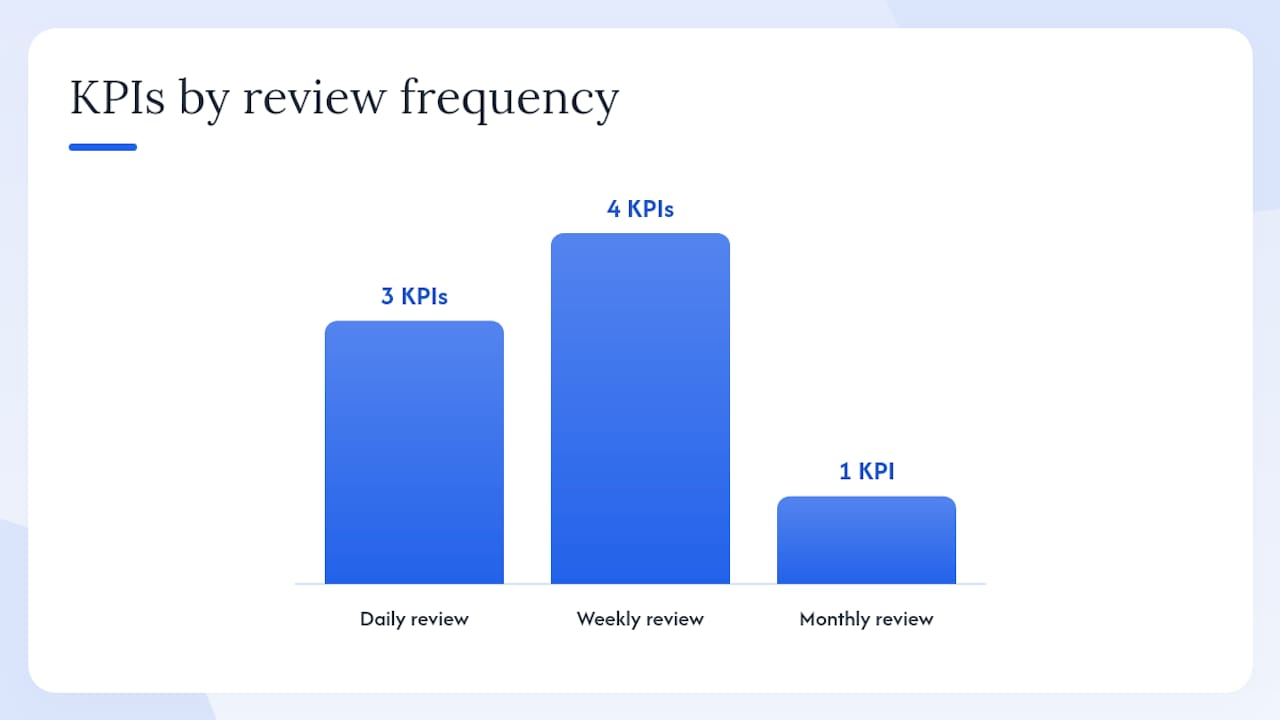
| Metric | What it measures | Review frequency |
|---|---|---|
| CSAT (Customer Satisfaction Score) | Customer-perceived quality per interaction | Weekly |
| IQS (Internal Quality Score) | AI-scored compliance with defined standards | Daily |
| IQS standard deviation | Variance across agents, shifts, and regions | Weekly |
| First-contact resolution (FCR) | Percentage of issues resolved without repeat contact | Weekly |
| Autonomous resolution rate | Percentage of interactions fully resolved by AI | Daily |
| Escalation quality rate | Percentage of escalations that were appropriate | Weekly |
| Cost per resolution | Total service cost divided by resolved interactions | Monthly |
| Average handle time (AHT) | Time per interaction (efficiency proxy) | Daily |
The variance metrics deserve particular attention. A stable average IQS can mask high variance: one team of agents scoring 90 while another scores 60 produces an average of 75, which looks acceptable until you see the distribution. Tracking standard deviation across agents, shifts, and regions shows whether consistency is actually improving or just averaging out.
CSAT and IQS should move together over time. If IQS rises but CSAT stays flat, your scoring criteria may not reflect what customers actually value. If CSAT rises but IQS stays flat, your criteria may be measuring the wrong things. The gap between the two is diagnostic data.
What challenges and risks should you plan for?
AI-driven quality enforcement introduces failure modes that manual QA does not. Planning for them before deployment is less expensive than discovering them in production.
| Risk | Description | Mitigation |
|---|---|---|
| Hallucination | LLM generates plausible but incorrect information | Retrieval-augmented generation (RAG) from verified vault; output verification layer |
| Bias in scoring | Training data reflects historical inequities in QA | Balanced training sets; regular bias audits across demographic and channel segments |
| Model drift | Model accuracy degrades as language and policies evolve | Quarterly revalidation against held-out data; drift monitoring dashboards |
| Privacy exposure | Transcripts contain PII that enters training pipelines | Anonymization before training; access controls on vault and logs |
| Blind spots | AI only scores what it sees; offline or cross-channel context is missing | Cross-channel context stitching; human review for multi-session cases |
| Confidence miscalibration | Thresholds set too high escalate too much; too low lets errors through | Shadow-mode calibration before launch; threshold review at 30 and 90 days |
Consumer skepticism about AI is a real operational constraint. Transparency about when customers are interacting with AI, combined with clear escalation paths to human agents, improves acceptance and reduces complaints. This is not just a brand consideration. In regulated industries, it is increasingly a compliance requirement.
Operational limits matter too. AI can only evaluate what it ingests. If a customer calls, then emails, then calls again, and each interaction is scored independently, the AI may miss the pattern of a recurring unresolved issue. Cross-channel context stitching, linking interactions by customer ID across channels, is a technical requirement for accurate quality measurement in omnichannel environments.
Human approval gates for write actions (refunds, account changes, cancellations) are non-negotiable in most regulated contexts. Confidence thresholds alone are not sufficient. A human-in-the-loop checkpoint for high-stakes actions protects against both model errors and compliance violations.
Where do these capabilities typically live in the vendor landscape?
No single platform category owns all of these capabilities. Most enterprise deployments stitch together two or three categories.
- Contact-center platforms — (enterprise-grade): Own QA scoring, agent assist, routing, and reporting. Zendesk and NICE are examples of platforms that have added AI-driven QA and agent coaching to their core contact-center infrastructure. IBM offers Watson-based orchestration and NLP capabilities that integrate into existing contact-center stacks.
The category matrix below maps capabilities to platform types:
| Capability | Contact-center platform | Agentic AI platform | Knowledge vault | Integration layer |
|---|---|---|---|---|
| QA scoring (IQS) | Primary | Secondary | None | None |
| Constraint enforcement | Partial | Primary | Partial | None |
| Knowledge retrieval | Partial | Primary | Primary | None |
| Routing and escalation | Primary | Primary | None | None |
| CRM writeback | Partial | Primary | None | Primary |
| Audit trails and logs | Primary | Primary | Partial | Partial |
| Cross-channel context | Partial | Primary | None | Primary |
Teams that need full coverage typically anchor on a contact-center platform for QA and reporting, add an agentic AI layer for orchestration and resolution, and connect both to a central knowledge vault. The integration layer handles CRM writebacks and cross-channel data stitching.
How Mediabloom enforces omnichannel consistency in practice
A healthcare services client came to Mediabloom with a specific problem: their inbound voice and chat channels were giving inconsistent answers on appointment availability and insurance eligibility. Human agents were working from different versions of the same policy document, and QA coverage was under 5% of interactions. CSAT scores varied significantly between their two highest-volume channels.
Mediabloom deployed its AI voice agents and chatbot layer with a shared knowledge vault containing approved eligibility language, appointment booking scripts, and HIPAA-compliant disclosure templates. Constraint libraries encoded prohibited language (specific coverage guarantees agents were not authorized to make) and required disclosures for each channel. The orchestration layer applied confidence thresholds: interactions where the AI scored below threshold on intent confidence were escalated to a human agent with a pre-populated context summary.
Within 60 days of the soft launch, QA coverage reached 100% of interactions. The IQS variance between channels dropped significantly, and the client’s team could see, for the first time, exactly which interaction types were driving repeat contacts. Appointment booking accuracy, measured by the rate of correctly confirmed appointments without follow-up correction, improved materially.
The governance structure was as important as the technology. A designated policy owner approved all constraint updates. A QA owner reviewed IQS trend reports weekly. Human approval gates remained in place for any interaction that involved a billing adjustment.
Review Mediabloom’s case studies for documented outcomes across healthcare, legal, and home services deployments.
Pro Tip: Start your pilot with appointment scheduling or order status. These intents are high-volume, low-regulatory-risk, and produce fast, measurable results. The data from a 30-day pilot on these intents gives you the calibration evidence you need to expand to more complex or regulated workflows.
Key Takeaways
AI maintains consistent service quality by encoding policy constraints, evaluating every interaction with automated scoring, and governing escalations through human-in-the-loop checkpoints, producing measurable gains in CSAT, FCR, and QA coverage.
| Point | Details |
|---|---|
| Policy encoding is the foundation | Structured constraints on vocabulary, tone, and disclosures enforce standards at the infrastructure level, not the supervision level. |
| Automated QA reaches full coverage | AI scoring can exceed 90% accuracy and cover 100% of interactions, versus the 3–5% sampling rate typical of manual QA. |
| Variance metrics reveal true consistency | Track IQS standard deviation across agents, shifts, and regions, not just average scores, to see whether consistency is actually improving. |
| Governance determines long-term results | Assign a policy owner, a QA owner, and a compliance reviewer before launch. Technology without ownership degrades over time. |
| Mediabloom deploys end-to-end | Mediabloom’s omnichannel AI platform combines voice agents, chatbots, knowledge vaults, and compliance controls in a single managed deployment. |
Why consistency is the metric that actually compounds
The conventional wisdom in contact-center AI focuses on deflection: how many contacts did the bot handle without a human? That is the wrong primary metric. Deflection measures volume. Consistency measures quality. And quality is what drives the outcomes that actually compound over time: higher CSAT, lower churn, fewer repeat contacts, and stronger brand trust.
The teams that get the most from AI-driven quality enforcement are the ones that treat the constraint library and the knowledge vault as living assets, not one-time setup tasks. Every policy change, every new product, every regulatory update needs to propagate through the vault before it reaches customers. The organizations that build that discipline into their operating rhythm, with clear ownership and scheduled revalidation, are the ones that sustain quality gains past the initial pilot.
There is also a governance reality that most vendor pitches understate. Consumer trust in AI remains fragile. Customers who feel they are being handled by a system that does not understand them escalate faster, complain louder, and churn sooner. The human-in-the-loop is not a concession to AI’s limitations. It is a trust signal that makes the whole system more effective.
Mediabloom delivers consistent AI service quality from day one
Mediabloom’s AI customer service platform gives revenue and operations teams a faster path to measurable quality gains than building point solutions from scratch. The platform combines AI voice agents, chatbots, a shared knowledge vault, and compliance controls (TCPA, SOC 2, HIPAA-ready) in a single managed deployment. Integrations with 600+ CRM and ticketing platforms mean your constraint libraries and IQS data connect directly to the systems your team already uses.
Clients like Miracle Ear and 1-800 Accountant have used Mediabloom to generate over 10,000 monthly leads while maintaining consistent, on-brand interactions across voice, SMS, email, and chat. The done-for-you setup includes constraint library configuration, knowledge vault population, and shadow-mode calibration before any customer interaction goes live.
Watch a live AI voice agent demo to see how Mediabloom enforces policy constraints and IQS scoring in a real omnichannel deployment.
Useful sources
- AI mastery in customer care: Raising the bar for quality assurance — McKinsey
- Generative AI is the catalyst for change in the contact center — Forrester
- Gartner press release: chatbots predicted to become primary channel
- NBER working paper — automation and labor (w31161) - NBER
- Crafting a distinct brand voice in an AI-driven world — Skyword
- Report shows consumers don’t trust artificial intelligence — FinTechNews
FAQ
How does AI maintain consistent service quality across channels?
AI enforces consistency through three mechanisms: encoded policy constraints that define approved language and prohibited topics, a central knowledge vault that serves as the single source of truth for all AI agents, and automated IQS scoring that evaluates 100% of interactions against defined standards. When these three layers are aligned, every channel produces the same answer in the same tone.
What is quality of service in AI-driven customer service?
Quality of service in AI customer service refers to how reliably an AI system delivers accurate, on-brand, compliant responses across every interaction. It is measured through internal quality scores (IQS), CSAT, first-contact resolution, and autonomous resolution rates, and it depends on the strength of the constraint libraries and knowledge vault the AI draws from.
How can AI improve customer service quality?
AI-driven QA can assess calls, chats, and emails at scale, reaching greater than 90% scoring accuracy and covering 100% of interactions versus the 3–5% typical of manual sampling. This full coverage surfaces coaching opportunities faster and reduces the variance that degrades customer experience over time.
What compliance considerations apply to AI in U.S. customer service?
For healthcare deployments, HIPAA requires transcript anonymization before any interaction data enters AI training pipelines. For outbound voice and SMS, TCPA mandates opt-out language and consent verification, which must be encoded as constraints at the policy layer rather than managed manually. Both frameworks require audit trails that AI-driven QA systems naturally produce.
Does Mediabloom support AI quality enforcement across multiple channels?
Yes. Mediabloom’s platform deploys AI voice agents and chatbots from a shared knowledge vault with unified constraint libraries, so policy updates propagate to every channel simultaneously. The platform includes TCPA, SOC 2, and HIPAA-ready compliance controls, and connects to 600+ CRM and ticketing systems for full-loop resolution and IQS reporting.